
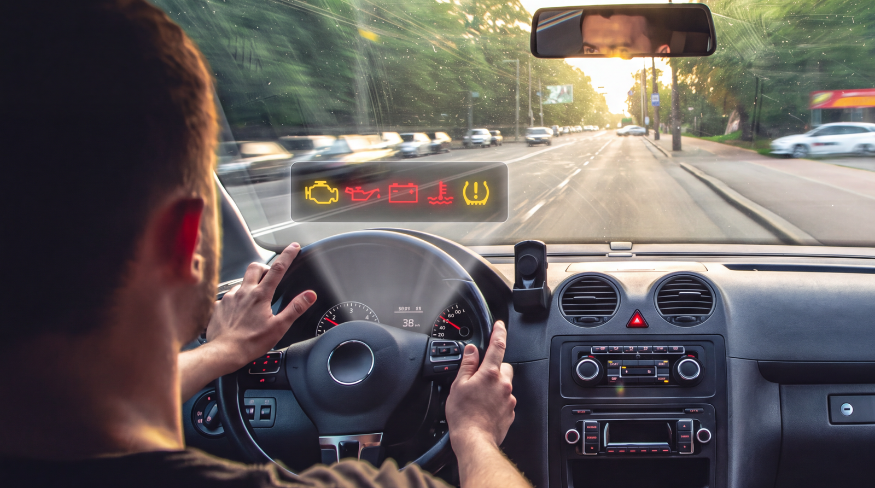
Every car on the road uses roughly the same color-coded system for dashboard warning lights, even if the exact icon varies slightly by make and model. Knowing what each color means makes it much easier to react the right way the moment a light comes on.
1. The Color Code That Matters Most
According to Kelley Blue Book, understanding the color often matters more than memorizing every symbol. Red or blinking lights signal something that needs immediate attention, like an overheating engine or a door that isn’t fully closed. Orange, yellow, or amber lights are advisory, flagging something that needs attention soon but usually isn’t an emergency, like the check engine light. Green or blue lights simply confirm a feature is active, such as headlights or cruise control.
2. The Lights That Mean Pull Over Soon
A few red lights are worth taking seriously right away. The oil pressure light, shaped like an old-fashioned oil can, can mean a leak, a failed pump, or a level low enough to damage the engine. The engine temperature light, shaped like a thermometer, signals overheating andshouldn’t be driven on. The battery light means the charging system itself may be failing.
3. The One Most People Ignore Too Long
The check engine light is usually orange and can mean anything from a loose gas cap to a more serious issue. It doesn’t always demand pulling over immediately but ignoring it for too long can let a small problem become a bigger, more expensive one. If it turns red or starts blinking, pull over and turn off the engine.
4. The Tire Pressure Light
According to the National Highway Traffic Safety Administration (NHTSA), the tire pressure monitoring system light means at least one tire is significantly underinflated. It’s required equipment on all passenger vehicles from model year 2008 onward, and checking tire pressure as soon as the light appears can prevent a bigger issue down the road.
5. The Brake System Light
This light usually appears as an exclamation point inside a circle, and it can mean a few different things. Most often it simply signals that the parking brake is engaged, but it can also point to worn brake pads, low brake fluid, or a bigger issue with the braking system itself. If topping off the brake fluid doesn’t turn the light off, it’s a sign the system needs a closer look.
While these lights and colors are largely standardized across manufacturers, the exact icon for a specific warning can vary by make and model. If a light comes on that doesn’t match anything familiar, the owner’s manual is still the fastest way to confirm what it means.
A Policy Review Pairs Well
Paying attention to what your car is telling you is part of being a responsible driver. So is making sure your auto insurance coverage reflects the car you’re driving and how you use it.
Whether you’re due for a check-in on your current policy or just want to see how your coverage compares, it only takes a few minutes to find out.
Get an auto insurance quote or contact a Westwood agent to get started.
Please note: This article is for general informational and educational purposes only. It does not represent any specific insurance policy and does not modify any provisions, limitations, or exclusions of any current policy.